⚡
Lan Briefing
1. The Warsh Doctrine: Balancing the Accelerator and the Brake
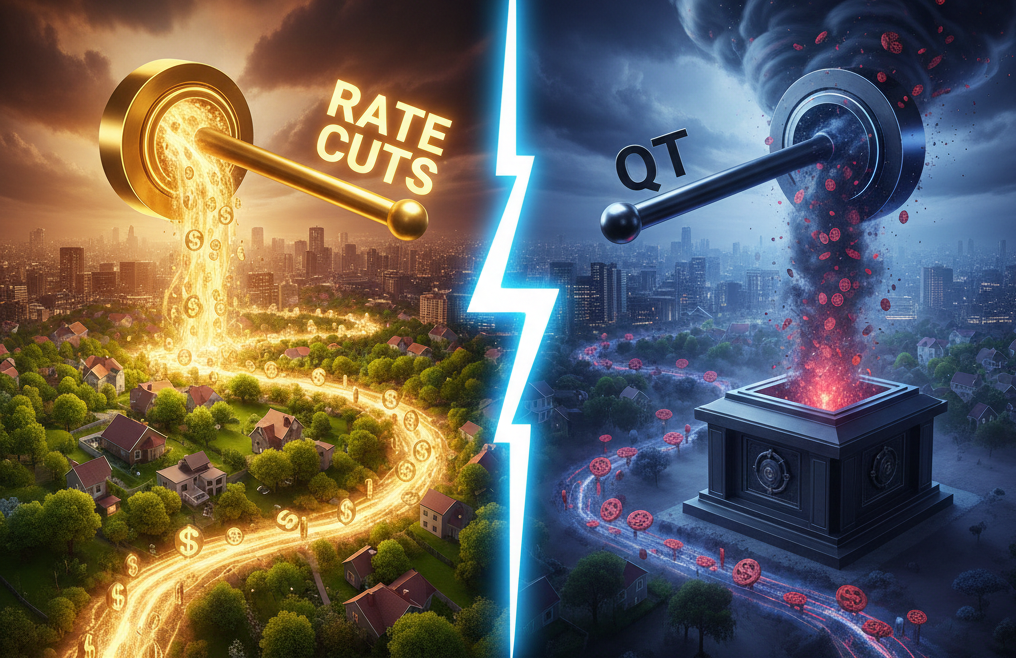
The financial world is currently parsing the “Warsh Doctrine”—a policy stance that seems contradictory at first glance. Kevin Warsh, the nominee for Fed Chair, intends to initiate front-loaded interest rate cuts while simultaneously shrinking the central bank’s massive portfolio of bonds through active QT.
By cutting rates (the accelerator) and maintaining QT (the brake), Warsh aims to lower the cost of capital for the broader economy while removing excess liquidity to maintain policy credibility. His core thesis relies on the idea that we are entering a productivity boom led by Artificial Intelligence, which could replicate the 1990s era of high growth and low inflation. He believes that a 1-percentage-point increase in annual productivity growth could double standards of living within a generation, providing the Fed more room to ease.
2. The Treasury’s “Cushion” Strategy: Bypassing the Fed
While the Fed focuses on leaning out its balance sheet, the Trump administration is opening a secondary liquidity tap. President Trump recently directed mortgage giants Fannie Mae and Freddie Mac to purchase $200 billion in mortgage-backed securities (MBS) to further drive down borrowing costs for American families.
This move is a strategic “bank shot” in financial engineering. As the Fed allows its MBS holdings to roll off (tightening), the administration’s intervention in the secondary mortgage market is intended to keep money flowing and rates low for everyday Americans. While some analysts suggest the ultimate impact may be modest—estimated at a 10 to 15 basis point dip in mortgage rates—the move functions as a short-term policy stimulant comparable to quantitative easing (QE) by increasing bond demand.
3. Market Outlook: Selective Liquidity and Strategic Shifts
For investors, the takeaway is clear: the era of “unconstrained” liquidity is shifting toward “targeted” liquidity. The combined effect of anticipated rate cuts and government asset purchases suggests a market where the downside is protected, but the upside is reserved for sectors demonstrating real productivity.
We are likely to see a focus on interest-sensitive sectors like housing and small-caps, which stand to benefit from lower borrowing costs. However, the long-term winners will be companies that can leverage the AI revolution to prove Warsh’s productivity thesis. Analysts suggest balancing dollar-strength benefits in early 2026 with a shift toward tech and green energy leaders as rate cuts accelerate in the second half of the year.
📋 Analyst’s Watch List (For Educational Use)
Housing & Real Estate Finance: Primary beneficiaries of the $200B GSE buying mandate and falling mortgage rates.
* Fannie Mae (FNMA), Freddie Mac (FMCC), and Homebuilder ETFs (ITB).AI & High-Productivity Tech: Sectors Warsh views as the “disinflationary engine” of the new economy.
* NVIDIA (NVDA), and leading AI infrastructure firms.Financials & Small-Caps: Positioned to capitalize on lower borrowing costs and traditional banking models.
* Regional Bank ETFs and the Russell 2000.
📊 Closing Thoughts
The policy mix of 2026 is an intricate balancing act. While the Fed officially attempts to “normalize” its balance sheet through active QT, the administration is utilizing GSE mandates to provide a liquidity cushion. Investors should look past the “tightening” headlines and follow the actual flow of assets; when the Treasury provides a buffer, the “Fed Brake” may be less restrictive than it appears.
💡 Today’s Insight:
“When the central bank pulls back and the government steps in, the liquidity doesn’t disappear—it simply changes its point of entry. Watch the GSEs, not just the Fed.”
📎 References
- •New Fed Chair Warsh Takes Office: Major Shift in Monetary Policy? : Analysis of the “tapering plus rate cuts” strategy. Link
- •Trump Touts Housing Wins In Georgia Economic Speech : Coverage of the $200B MBS purchase directive for Fannie and Freddie. Link
- •Trump’s $200B MBS Purchase Plan: Short-Term Housing Rally, Long-Term Risks : Market impact and transmission mechanism of the MBS buy. Link
- •Fed officials at odds over AI’s impacts on monetary policy : Kevin Warsh’s stance on AI as a disinflationary force. Link
⚠️ Disclaimer
This content is for informational purposes only and should not be considered as investment advice. Investment decisions and their outcomes are solely the responsibility of the investor. The information provided may be inaccurate, and we do not guarantee its accuracy or profitability.